See which claims are backed before you interview.
Post the role, take applications on your own careers page, and read every CV with its receipts: what the CV supports, in the candidate's own words, and what nobody has shown you yet.
Post a roleLead Data Engineer
What the CV shows
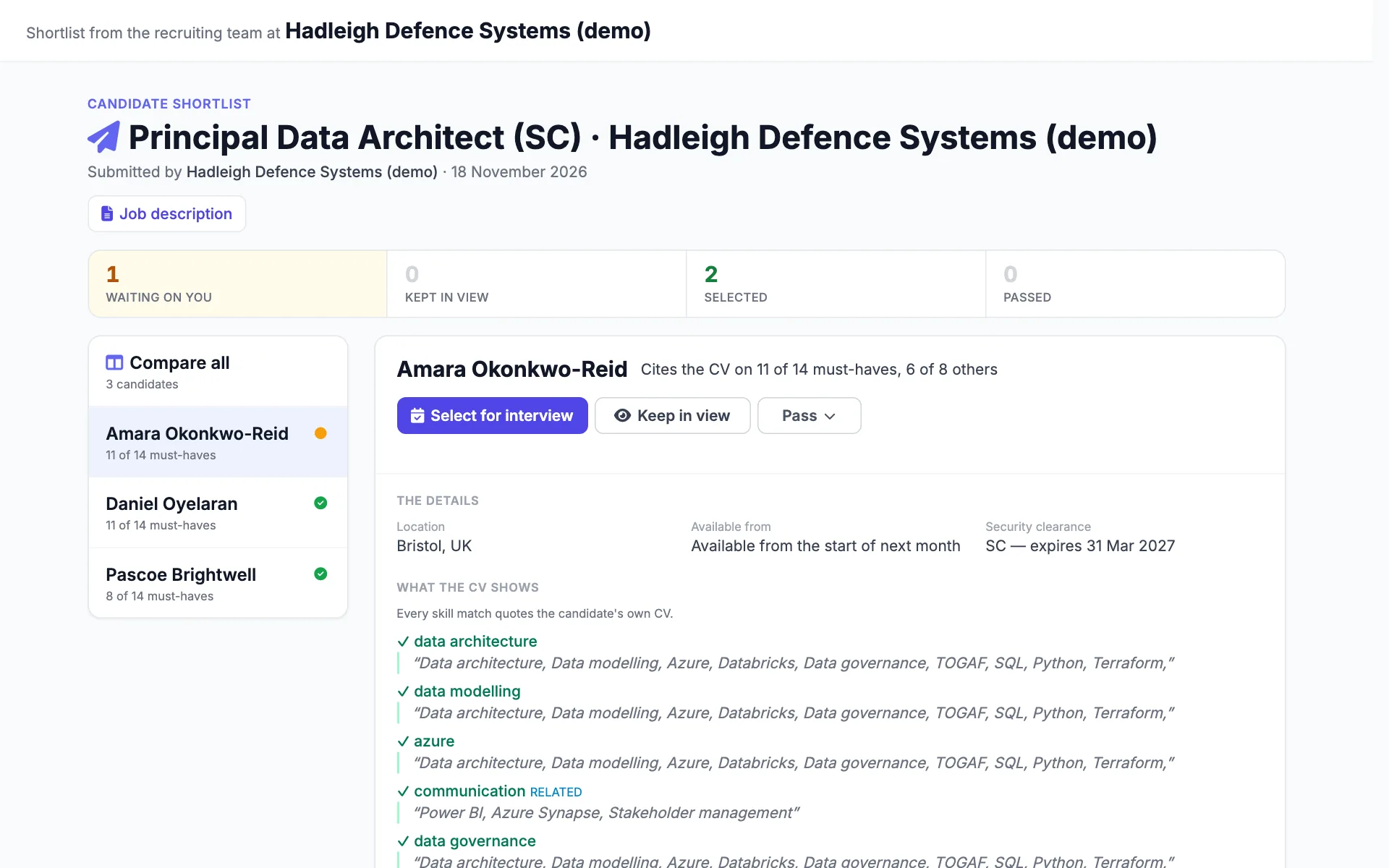
Every skill match quotes the candidate's own CV.
“Led the move of 40 claims pipelines to Databricks at Ardwell Mutual.”
“Built the fraud-detection models that screen card payments.”
Ask at interview
The shortlist, read line by line, then decided.
Write a few lines. Get the job description.
Give it a brief and it drafts the full description, yours to edit before anything goes live.
Draft it for me
Principal Data Architect (SC)
Lead the architecture of our data platform, hybrid from Bristol.
What you'll do
- Own the platform's target architecture.
- Model the data the analysts report on.
- Mentor two data engineers.
What we're looking for
- Data architecture on Azure and Databricks.
- Dimensional and data vault modelling.
- Current SC clearance.
Nice to have
- TOGAF, or a framework like it.
Your careers page, and a form with no account.
One switch lists the role on your careers page. Candidates apply in two minutes with no account, and each is told software matches and a person decides.
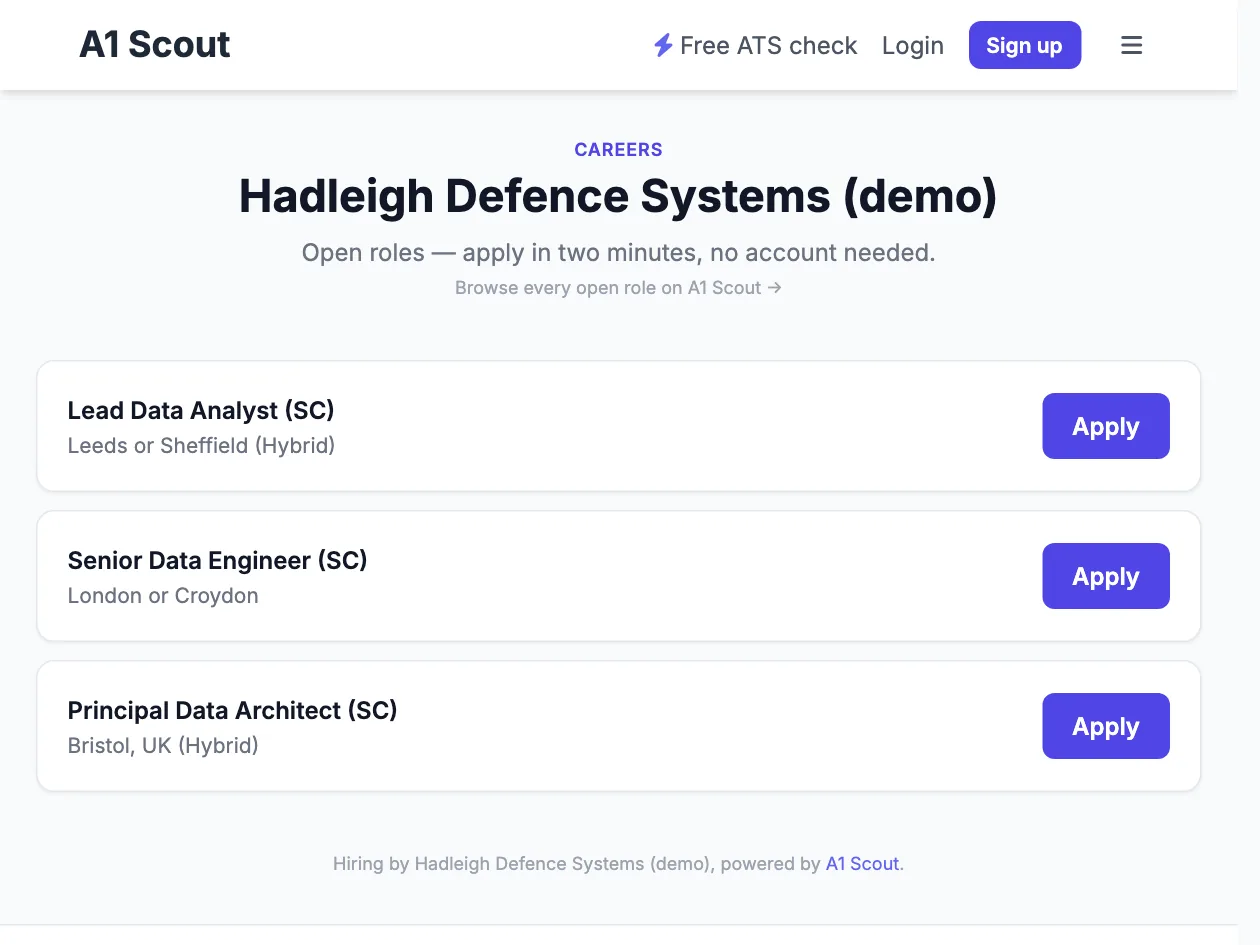
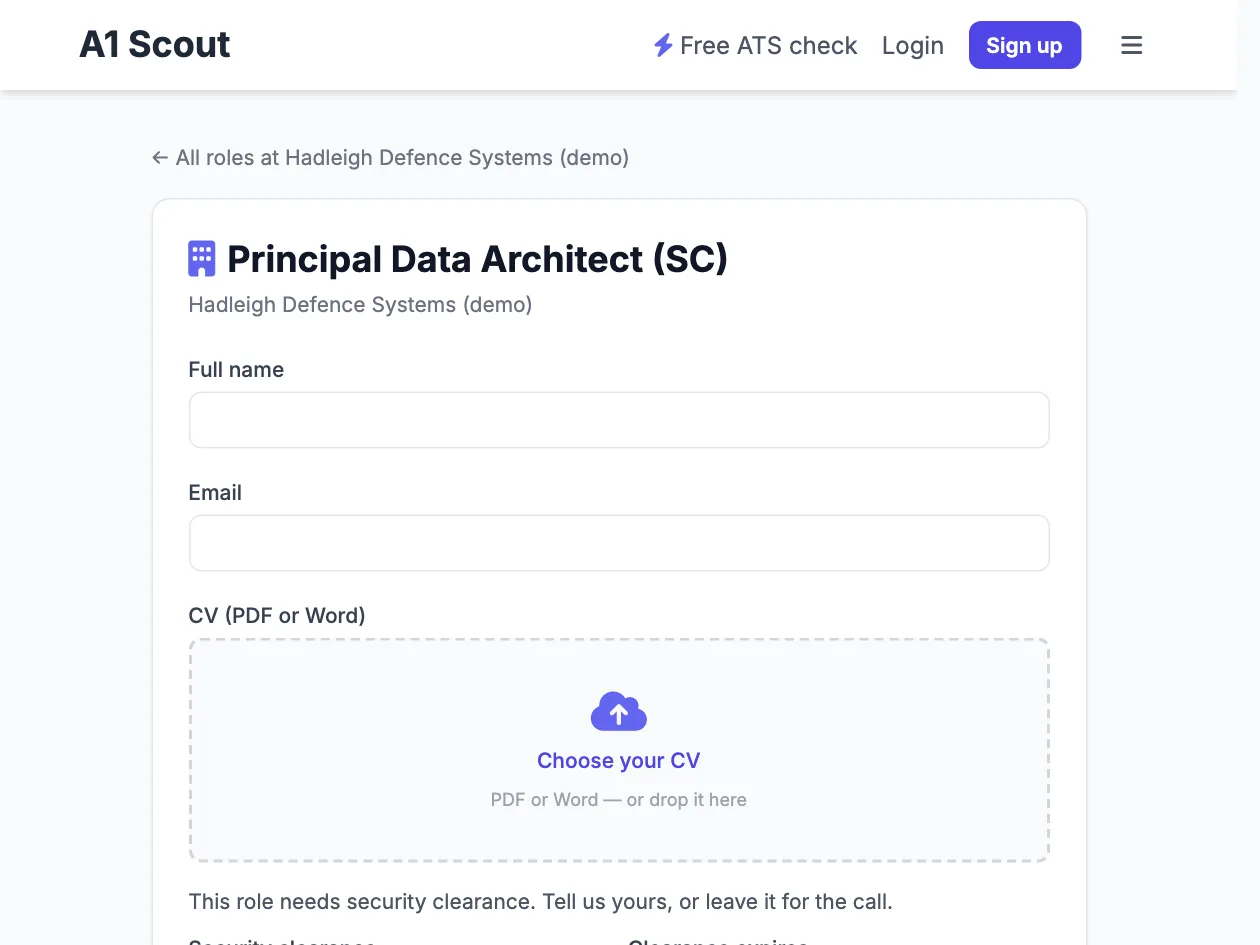
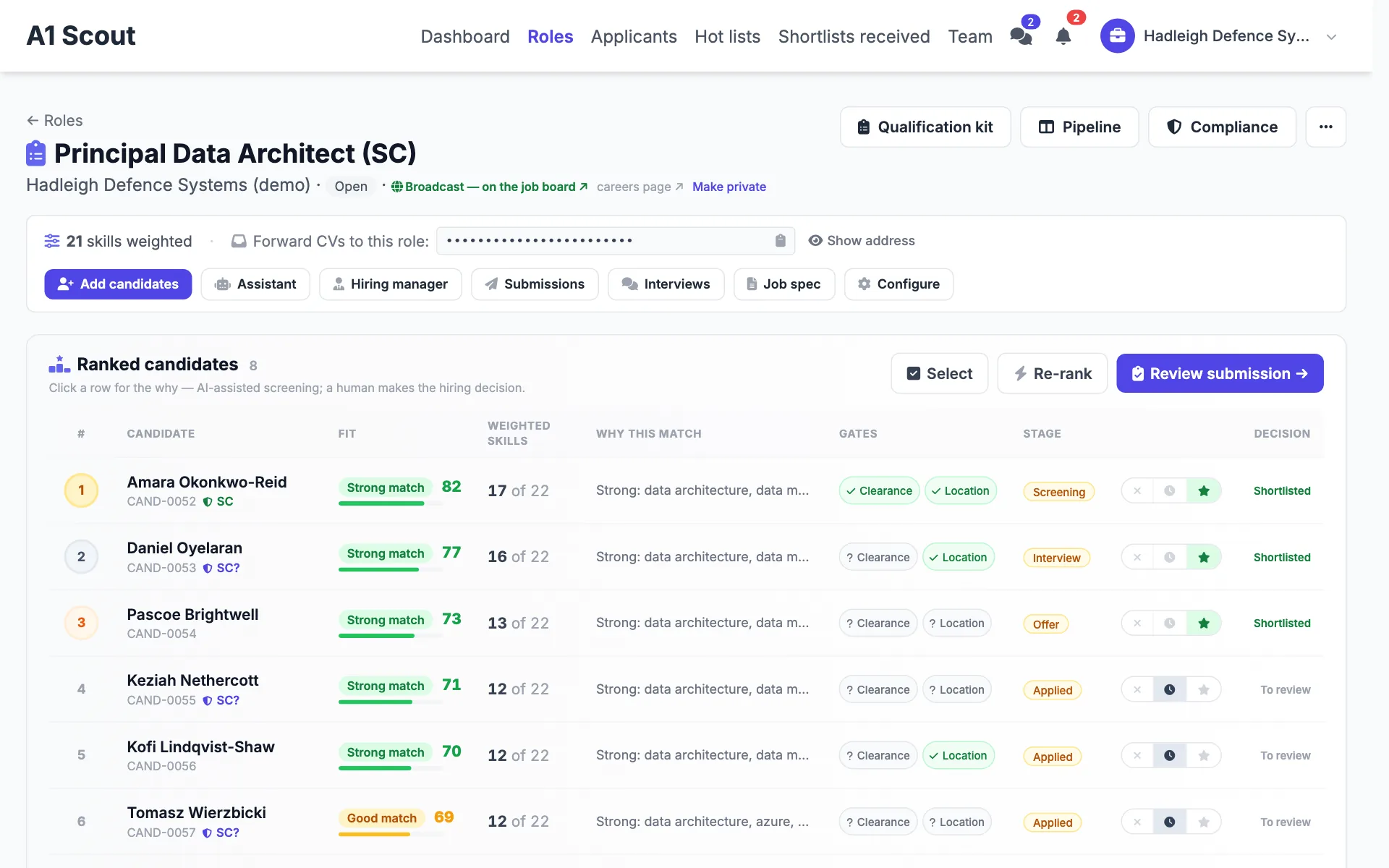
Every applicant, ranked on what the CV shows.
Applications arrive read against the role's must-haves, with the reason beside each name.
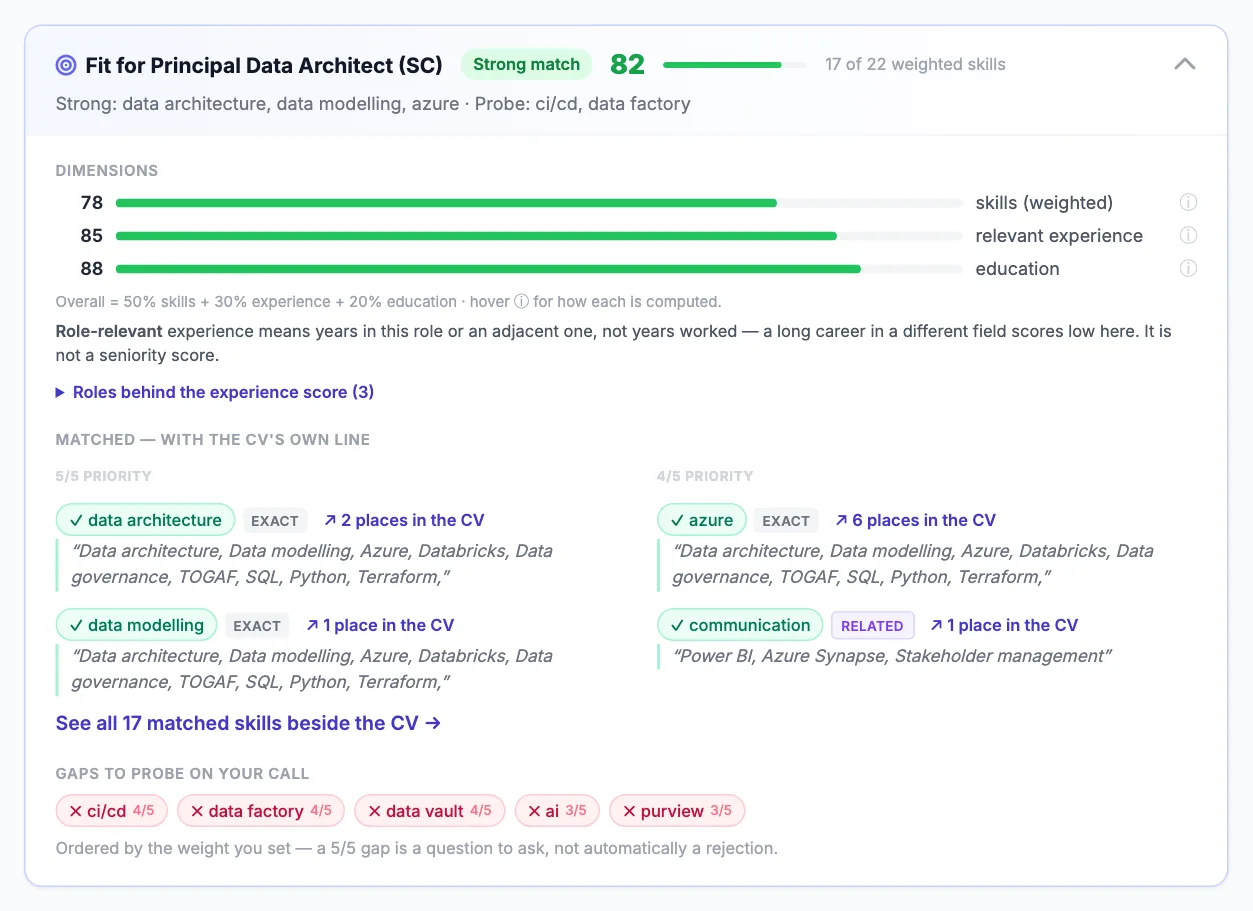
Start the interview from what is missing.
Every match quotes the CV's own line. A must-have with no line is a gap to ask about at interview, not a rejection.
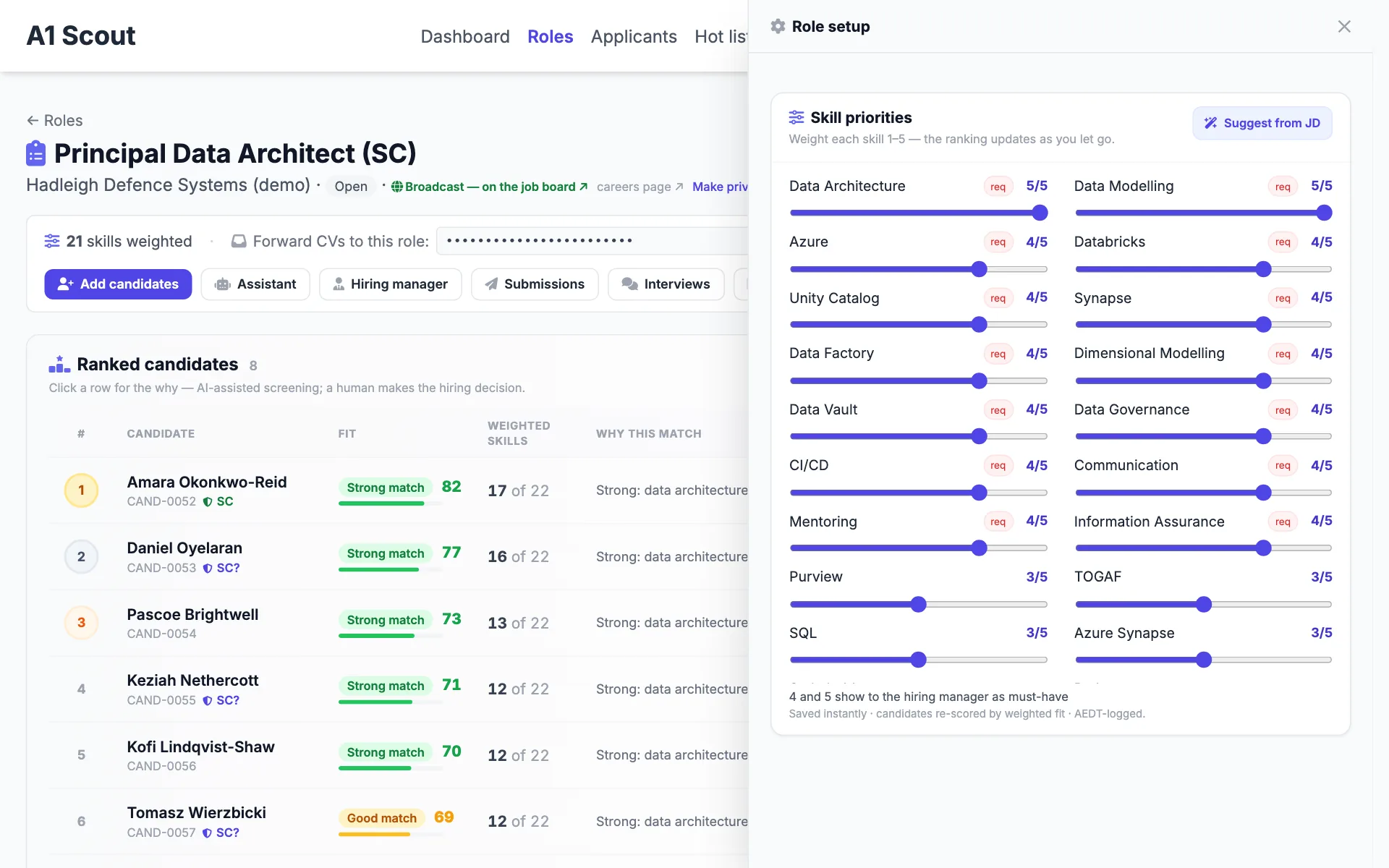
You decide what matters.
Weight each skill from 1 to 5 and the ranking follows. A 4 or a 5 is a must-have to your hiring manager.
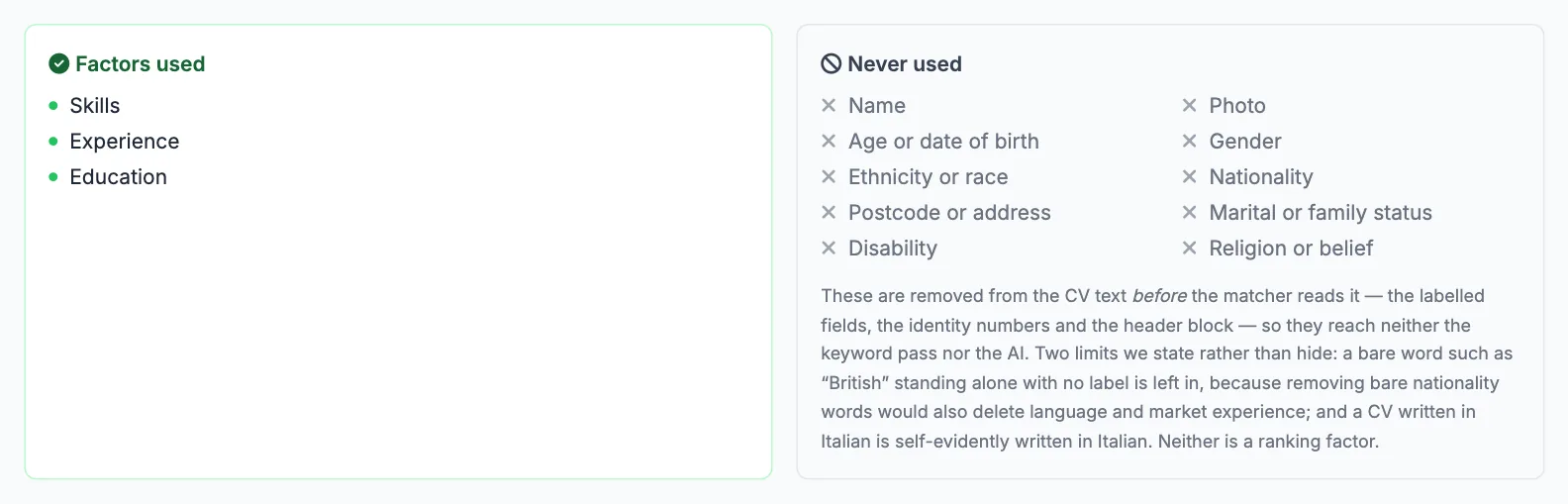
It reads skills, experience and education. Nothing else.
Name, photo, age, gender and nationality are never used, and every role's compliance page lists what is.
Your hiring manager decides from a link.
No account to make. One click selects for interview, keeps in view or passes, and the reason comes back to you.
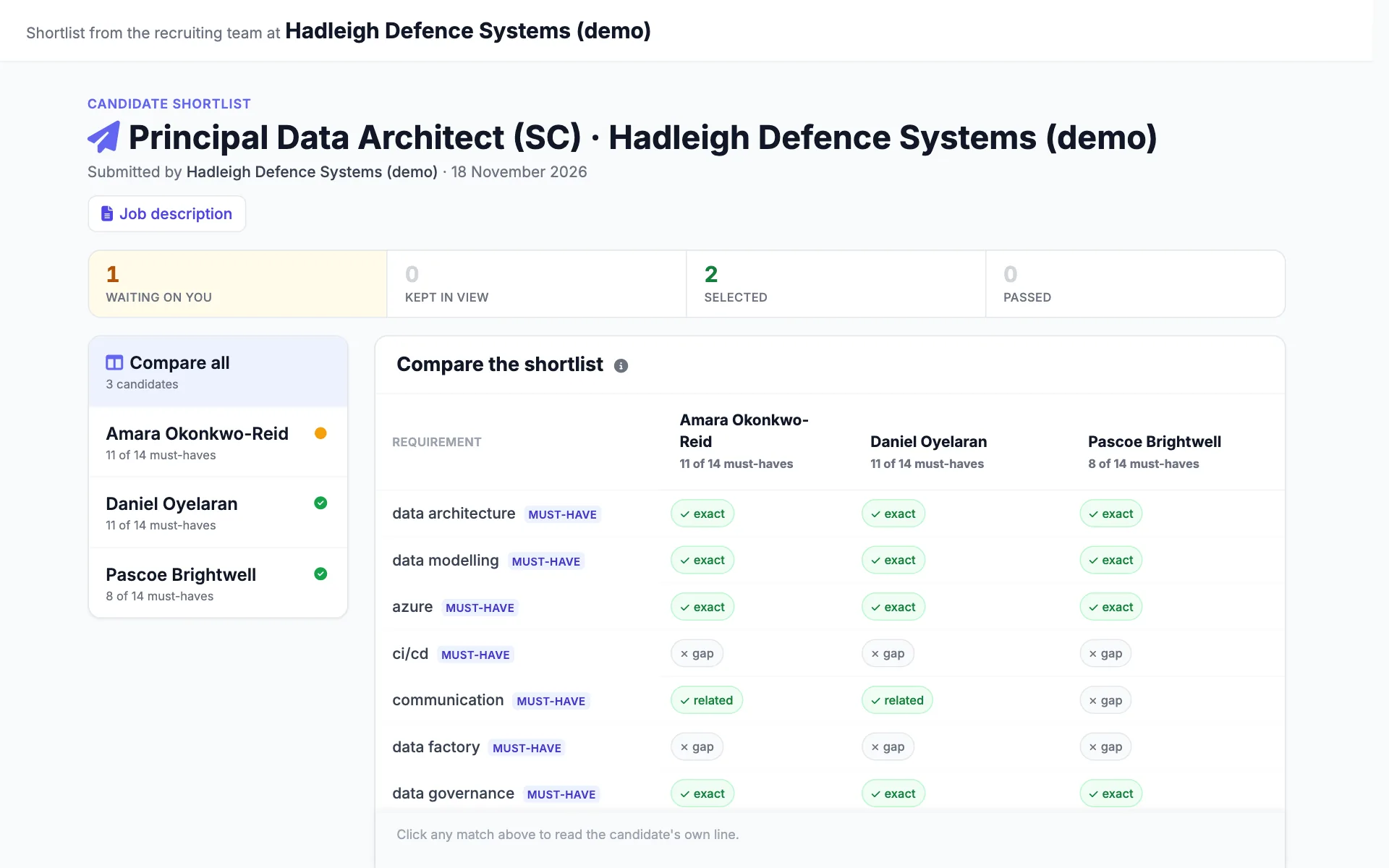
The shortlist side by side, must-have by must-have.
Each must-have reads exact, related or a gap, and any match opens the candidate's own line.
Run your own interview rounds.
Invite a candidate, read their answers to your screening questions, and confirm one of the times they offer. They get the calendar invite.

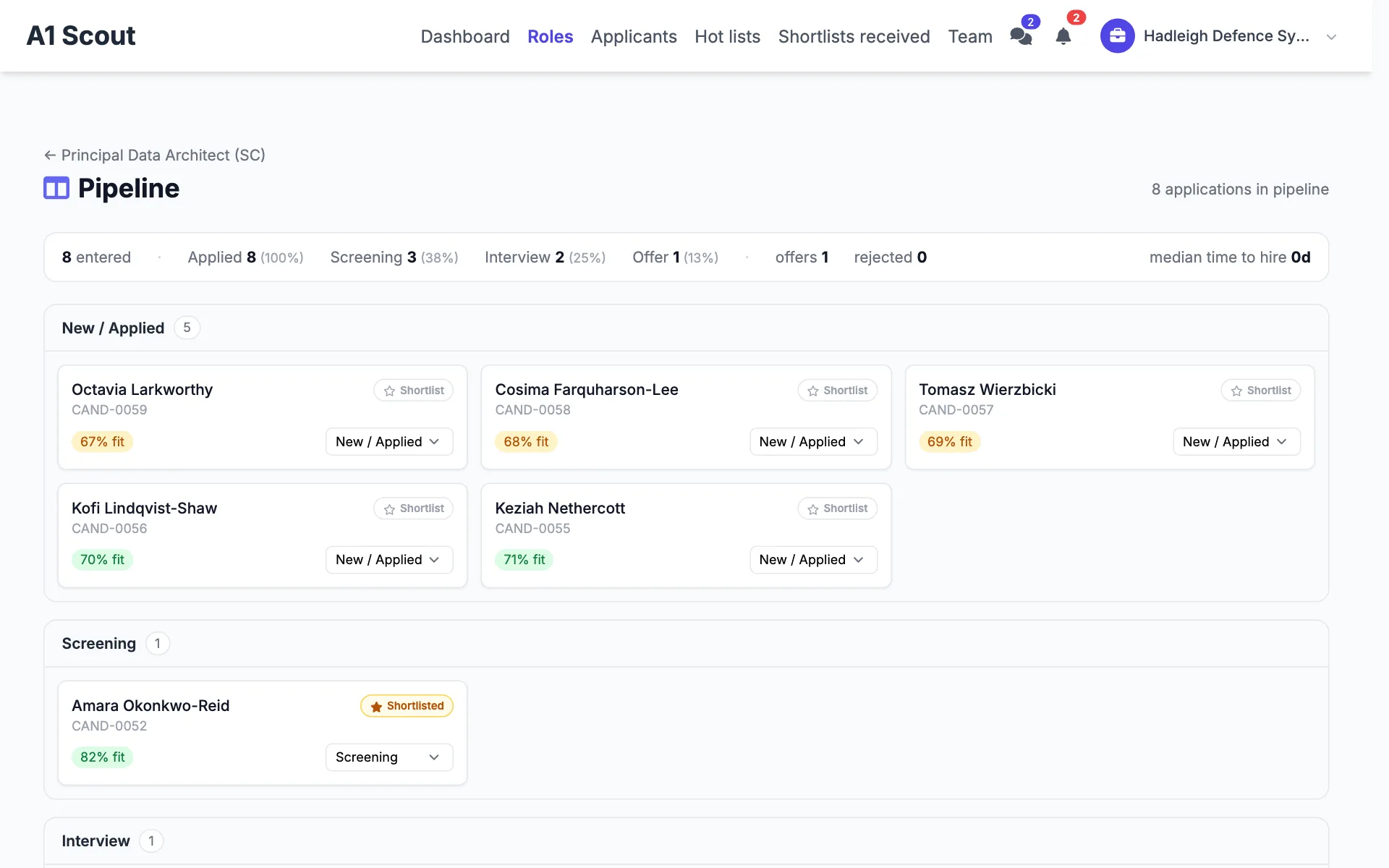
Every applicant, from applied to offer.
Each stage is counted, and each candidate moves on with one choice.
A person decides.
A1 Scout ranks on cited evidence and collects no protected-characteristic data. How A1 Scout uses AI
UK-hosted. EU AI. Your data stays yours. Nothing is invented.
Post a role